
Unleash the Full Capabilities of AI
Go Beyond Vector Stores. Intelligence Investigates.

Hello everyone. This month, I have been teaching several classes, giving training. You should enroll in my training. I give the following classes:
AI for Everyone
OSINT for Everyone
Knowledge Graph from Scratch
GraphRAG from Scratch
It is always great to have discussions with others and learn how they do things, and to learn from each other’s insights. I’m going to keep providing training. Why? Because I want to get rich? No. Because I want more guitars? Well……. No, it’s because I want you to build the best intelligences that you can. I want a good future.
In today’s article, I am going to explain the strengths and limitations of RAG vs GraphRAG. I don’t use GraphRAG just because it is cool. I use it because it is superior, in my personal opinion. Real intelligence investigates, it does not just answer. And my intelligences are World Aware.
But this article is for my premium readers. My foundational articles are free, but my OSINT and AI Architectures cannot be read for free. They are valuable, and I need to pay my bills, not give away all of my work and time for free.
So, if you would like to read about why GraphRAG is superior to RAG, please upgrade your subscription. Only 2% of my readers are helping sustain this blog. That is too low. Please upgrade now if you want to read technical articles.
Ok, here we go!
Building Beyond RAG
In 2021, I built my own search engine in my first company. It was vector search. I know quite a lot about Natural Language Processing as I have been reading and writing about it for almost ten years now. Vector Search is applied Natural Language Processing (NLP).
A lot of what I say is informed by the fact that I have built my own search engines from scratch. I understand this topic well, and I have been writing about Natural Language Processing long enough to remember that in 2020 the Software Engineering and tech industry was uninterested in Natural Language Processing and Vector Search.
Then suddenly in 2023, LLMs hit the mainstream and people became experts overnight.
Back in 2021, I actually disliked Graph Databases. I’m not a Graph Database cheerleader. I don’t make fancy Ontology images and talk theory.
So, in today’s article, when I describe the benefits GraphRAG has over RAG, it is because things have changed. I didn’t become a Graph Database cheerleader and no Graph Database company sponsors me or my content. I am a truth-teller. I am telling you what I believe and understand from experience. These are my opinions, take it or leave it.
RAG is an Incomplete Foundation
When people learn to do things, they use what they can understand. Vanilla RAG is the simplest way to build RAG systems. Not everybody reads my Network Science book or blog articles. Not everyone has spent thousands of hours learning this stuff and NLP. Since they have not, they naturally started with what they understand and can relate with. RAG is simple enough to understand and a lot of people talk about it. There is a larger community of support, and similarity is simple enough to understand.
But RAG is an incomplete foundation compared to GraphRAG, and I will explain that in this article. You can do things with a Knowledge Graph and GraphRAG that you cannot do with a Vector Store and Vanilla RAG.
Like what?
Graph Traversal
Social Network Analysis
Bipartite Projection Analysis
Useful Aggregation
Unlimited Graph Capabilities
Extremely Explainable Results
These are useful things, and I’m going to cover them in this article. I will talk about these things in my Knowledge Graph from Scratch class, and I do talk about them in my GraphRAG from Scratch class. Enroll today.
Real intelligence investigates. It does not just answer. Graph enables exploration. Similarity unlocks probing, but that is not the same as full-scale investigation.
Knowledge Graphs and GraphRAG unlock full-scale investigation, and I can teach AI agents to do anything that I can do. If you want useful answers from AI agents, teach them to investigate completely, not just answer. That’s common sense, in my opinion.
I think Vector Search became popular because a) it is the simplest approach, b) anyone can do it, c) you don’t need to understand Graph or complexity, d) everybody is doing it. The tech industry follows crowds. The best engineers chase signal and learn how to stand out. I show you how to stand out, not how to be a follower.
Similarity is Powerful, but It Isn’t Enough
In my class GraphRAG from Scratch, I describe how RAG is similarity-based and GraphRAG is same-based and allows for traversal. Let’s use some images to communicate this.
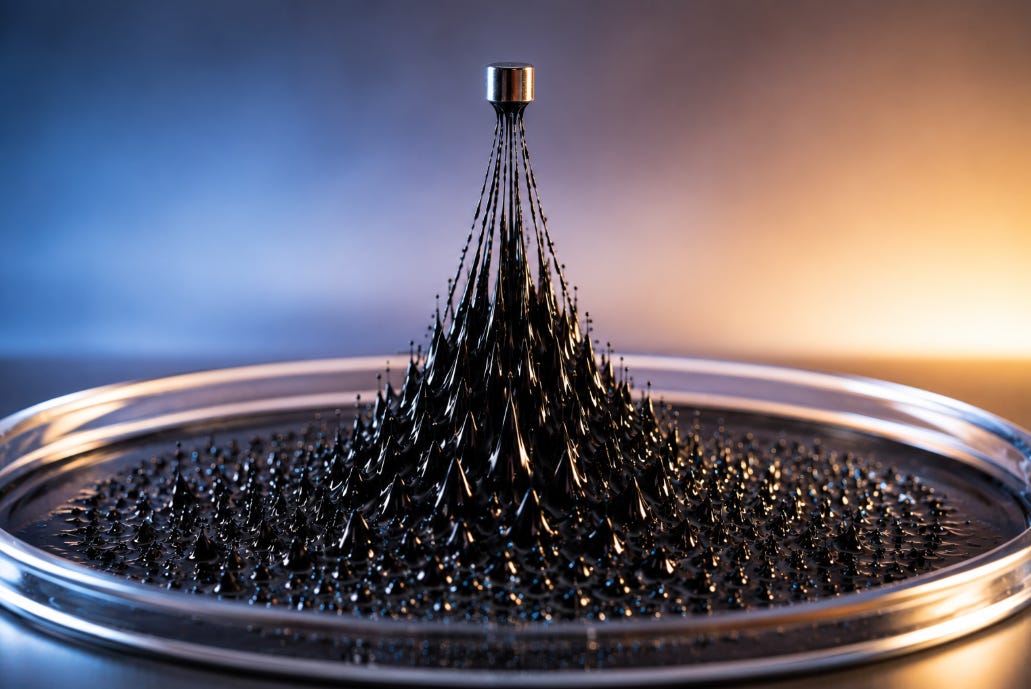
A movie called District 9 inspired this image, but this is an AI generated image of ferrofluid behavior. I don’t want to talk about the image much other than to explain that this is a useful illustration of how text similarity algorithms work.
Similarity is not same.
I use a similarity algorithm in my own personal clustering algorithm. I’ve given that algorithm to all of my readers, in fact. I am not against similarity algorithms. That’d be a ridiculous thought. I love Natural Language Processing, and it is very useful to be able to detect similarity of things.
But Similarity is not Same. Similarity pulls in a lot of extra noise. Same does not. What is the impact of extra noise?
More unrelated data
More opportunity for hallucination
Less Reliable AI
More token use
More money spent
More latency
Look at the image. Similarity thresholds have to be tuned, and I can personally tell you that each dataset will differ on the amount of similarity you need. Does your RAG system understand that each topic requires a different similarity threshold in order to be effective? Sometimes you need nearly 100% similarity, and sometimes a clustering algorithm will be most useful at 30-40% similarity. Blanket thresholds are impractical. Language is complex.
Why do I know this? Because I have been writing about Natural Language Processing since the time when software engineers pretended it was irrelevant to Software Engineering, and that was as recently as 2022. I have been obsessed with NLP since about 2016 and I have been doing NLP since about 2001.
Scroll up and look at the image one more time. With similarity search, more than just relevant documents can be picked up.
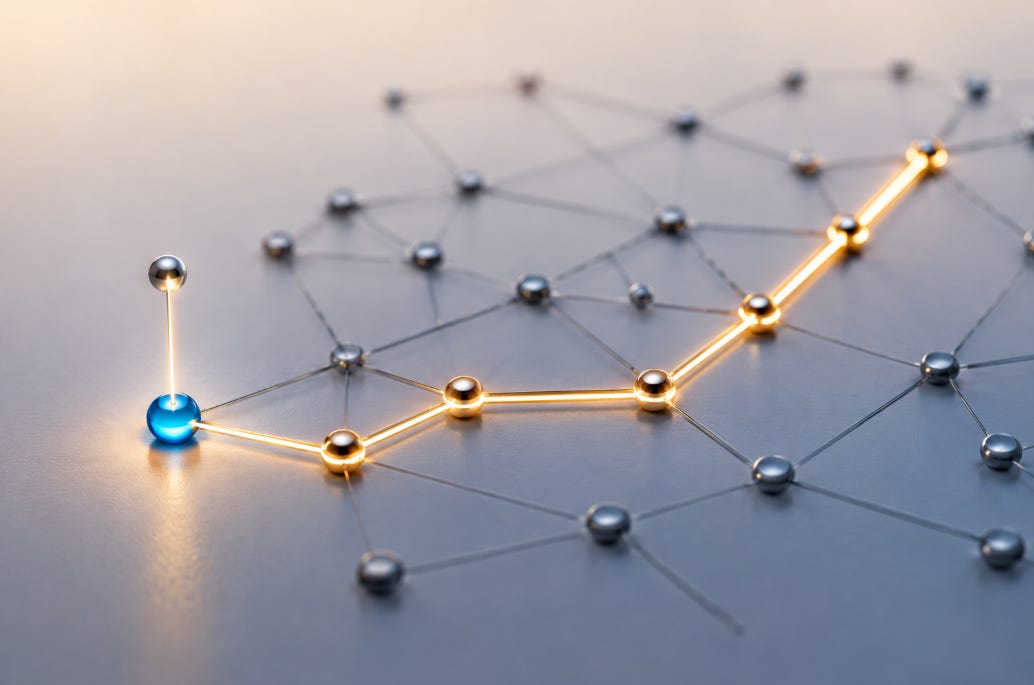
GraphRAG is not similarity based. It can do similarity search, but it doesn’t have to. It works with nodes and their relationships to other nodes. There is not just one way to build Knowledge Graphs or GraphRAG, either.
Graph is not similarity based. You traverse graphs, and you analyze graphs. Documents can be stored in a Graph Database. You do not need both a Vector Store and a Knowledge Graph to build a GraphRAG interface.
The image illustrated Graph Traversal. If I ask the question, “What happened in Oregon on July 24, 2026?”, the GraphRAG does not fire off a similarity search for the tokens [‘Oregon’, ‘July’, 24, 2026, ‘July 24, 2026’]. The GraphRAG understands the Knowledge Graph schema and it looks for documents that are attached to two nodes:
Oregon
July 24, 2026
This is much simpler to understand and explain. I just explained it to you, in fact.
But it’s not just how the data is retrieved that matters. You can do more with a Knowledge Graph and GraphRAG combined than you can with a Vector Store and RAG. I think differently. I come from OSINT. Investigations are a part of my life. Investigation is not an optional add-on capability.
Knowledge is More than Similarity
I like this header so much that I am tempted to just use it as the first sentence in this paragraph, but that’d look goofy. Knowledge is more than Similarity. It has structure. Text can be converted into Graphs. I wrote a book about how to do that in 2021, pre-LLM. I wrote an AI Engineering book in 2023 and called it Network Science with Python. A lot of people cannot connect the dots that I have been talking about building Intelligences this whole time. Come on.
Knowledge has structure. Even text can be converted into a graph. Text describes:
Entities
Relationships
Facts
Context
Explicit connections
I live in the graph. It isn’t just a thing I use. I play in graphs. I teach my AI Agents to play in graphs. What does that actually mean? I write code that traverses graphs and does stuff while traversing graphs. I teach my agents to be able to convert text into social networks and do Social Network Analysis. I teach them to go way beyond simply answering questions about text chunks. I give them the ability to understand the structure of knowledge and interact with it directly.
Real intelligence investigates. It does not just answer.
Let’s Compare RAG and GraphRAG
Let’s compare these two architecture approaches based on what they do and do not unlock.
Graph Traversal
You can traverse a Knowledge Graph or Social Network Graph. AI Agents can too. You cannot traverse a vector store the same way.
That means that a Knowledge Graph unlocks investigation and a Vector Store really does not. You can probe it with repeat questions, but it is still similarity-based. It isn’t node-based like a Graph. With a graph, you can continue to traverse and explore the graph. I’ve written a hundred articles and a book on this stuff.
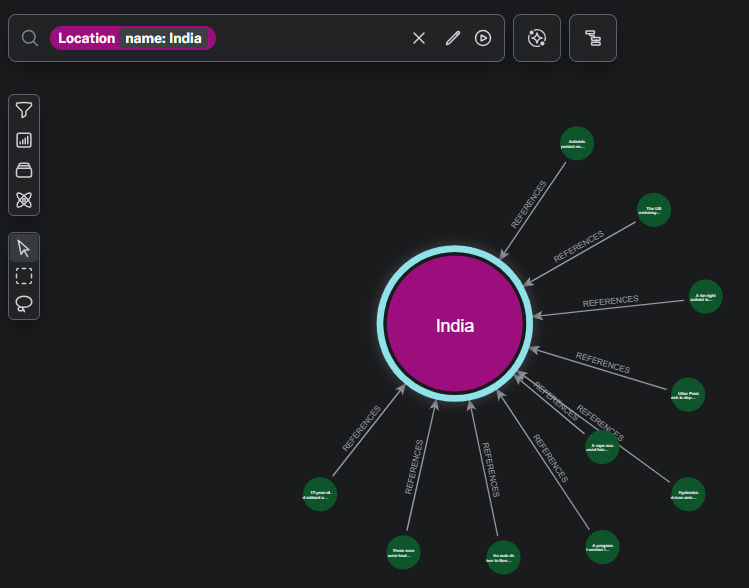
I can literally explore a Graph Database starting with any single node of interest and expand to find what I am looking for.
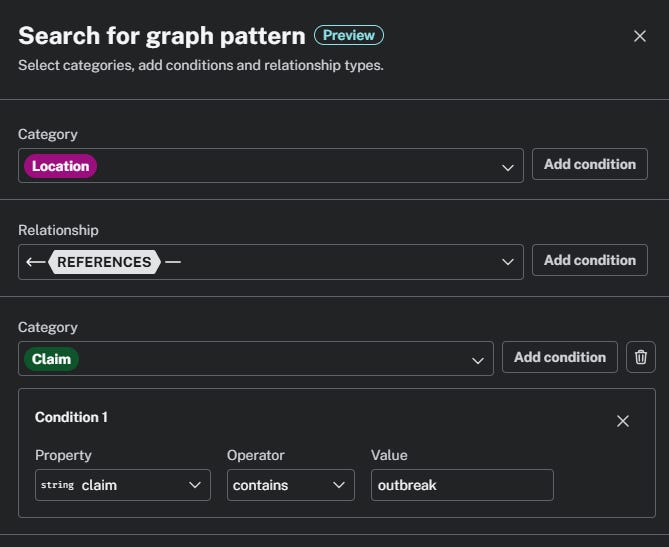
I can do a more advanced search looking for any internet claim having to do with an outbreak in India or anywhere else in the world. I can investigate. I can teach my AI Agents to do anything that I can do.
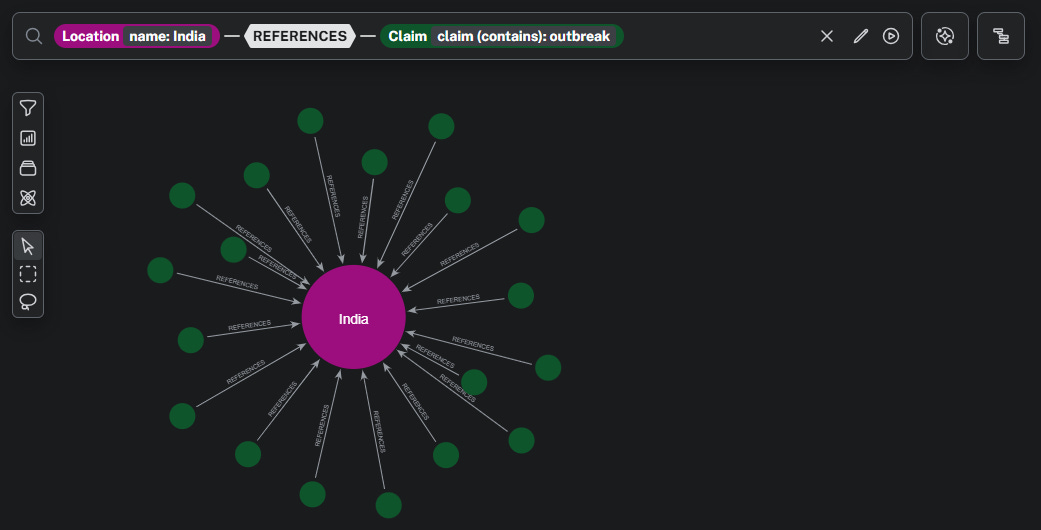
Cool. I can investigate even further and learn more.
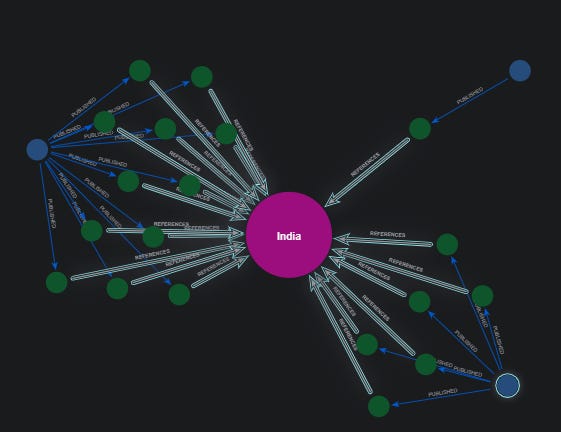
Cool. I can see that three websites wrote the articles, and I can learn more about them. So can my agents. This is easy with a Graph Database and GraphRAG.
Social Network Analysis
I can also investigate the relationships between people. I’ve shared this with you before. Open it, wait twenty seconds, and then explore it.
This is a Social Network of music and art collaborations that happen around the world—past, present, and future.
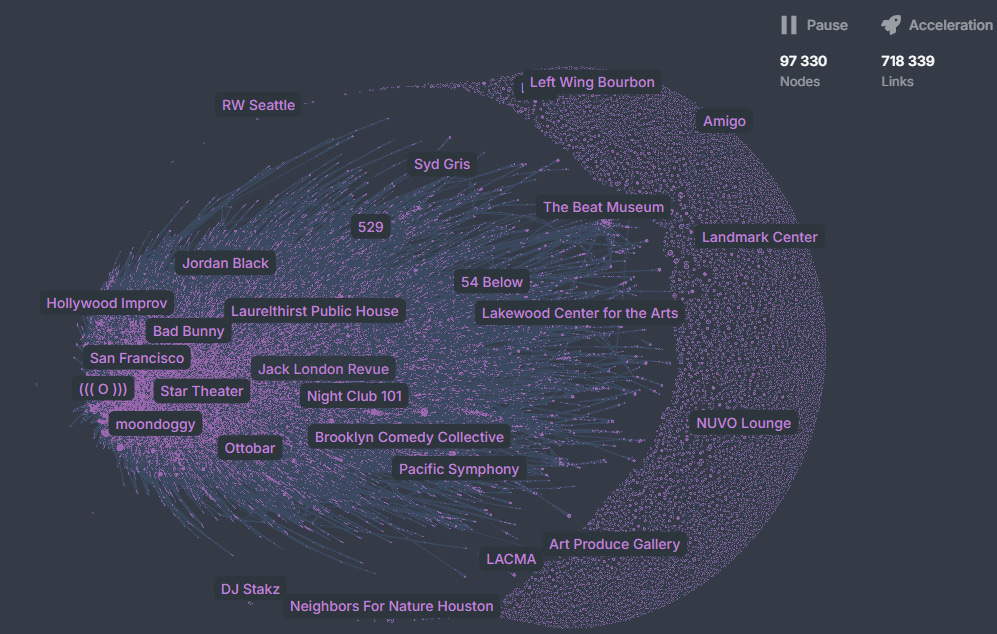
This wasn’t done with direct linking. Even a Knowledge Graph by itself cannot generate this, it takes Network Science and Social Network Analysis skill to do these big things. That is nearly 100,000 artists and venues, 718,339 relationships. My AI Agents can answer based on this data. They have greater awareness than simple RAG Agents that can only probe similarity.
Graph Aggregation
Knowledge Graphs are not just for answering questions with AI. That’s the takeaway for this whole article, in fact. If you want to teach your agents to investigate, you need more than RAG and Agentic tooling. You need a proper foundation for investigation.
I come from decades of working with Relational Database and SQL, so if a Graph Database cannot do what a Relational Database does, I get very annoyed. One thing that is commonly done with Relational Databases is that an analyst will write an aggregation query. Aggregation has to do with counting or averaging.
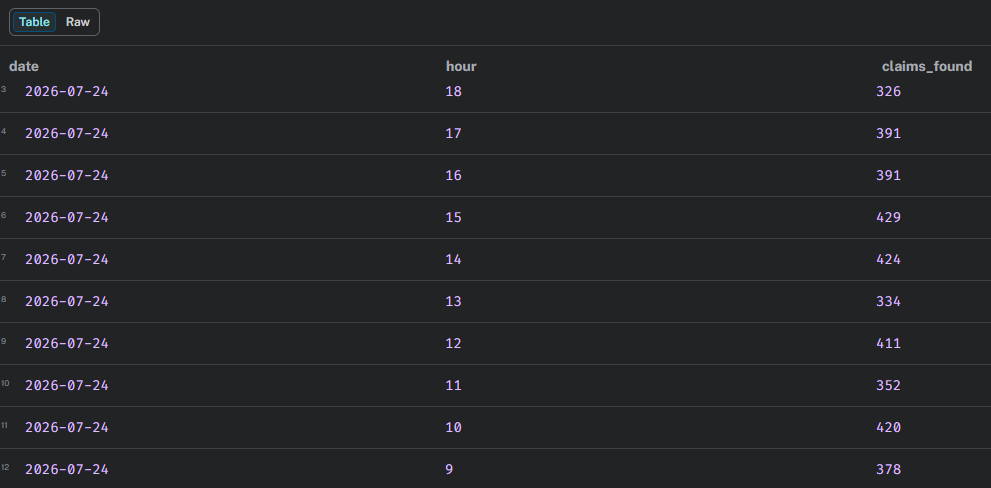
I can literally investigate the data with aggregation queries, and so can my AI Agents.
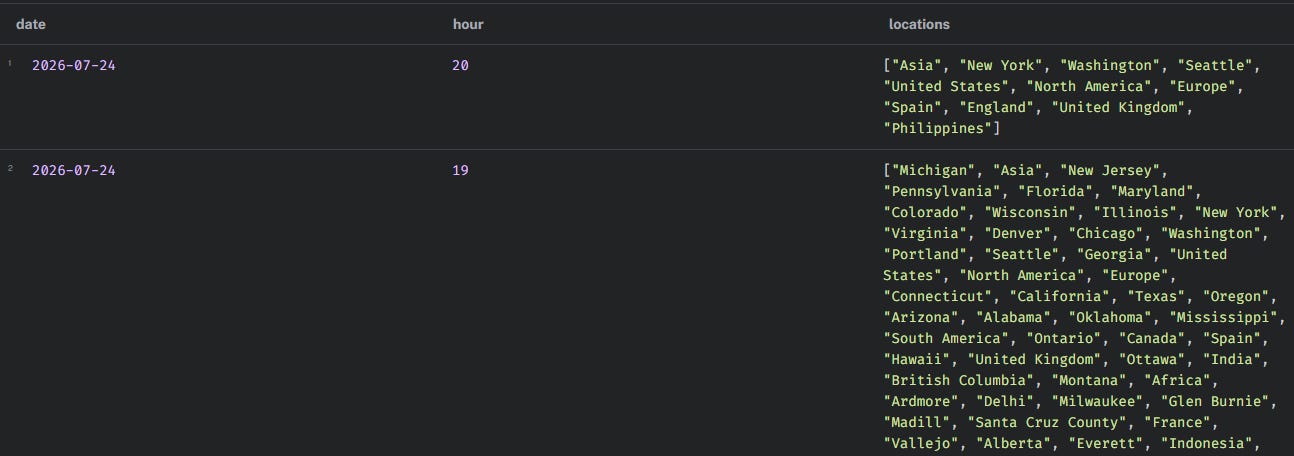
I can use aggregation to understand where things are happening.
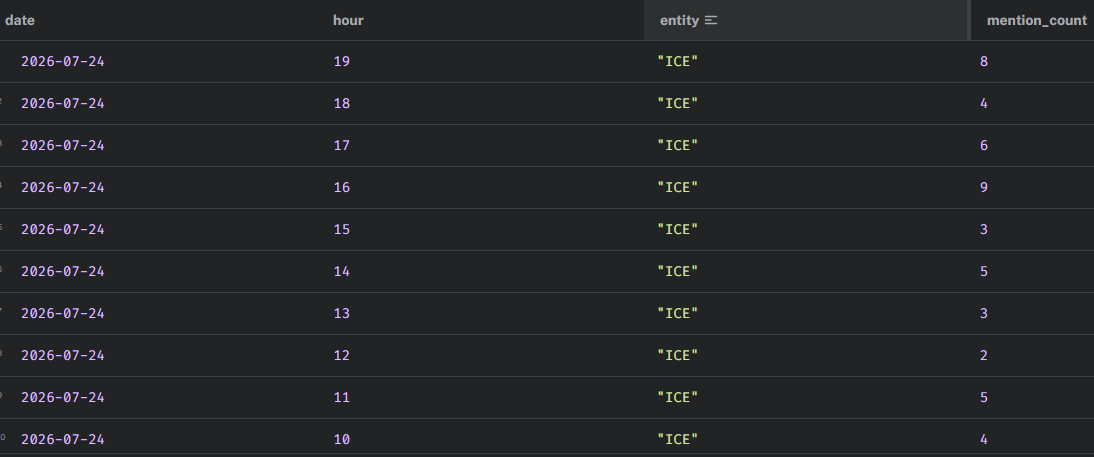
My agents can talk about the number of times any specific entity (person, place, or organization) has been mentioned in the real world. One database does it all. I do not need to use a Vector Store and an adjacent document store to aggregate entities. I can do it all with one database, and my Agents are empowered. My AI Agents can search, traverse, aggregate, execute, and do anything that I teach them to do. Domain knowledge matters most.
Flexible Graph Queries
Investigation must be flexible. Investigation is more than simply probing. Investigation involves finding and following leads, not just answering on a mountain of documents. If you want to build real intelligence, it must be flexible like your own mind.
So, it must be flexible even in how it writes queries. It must be able to fetch data in several ways.
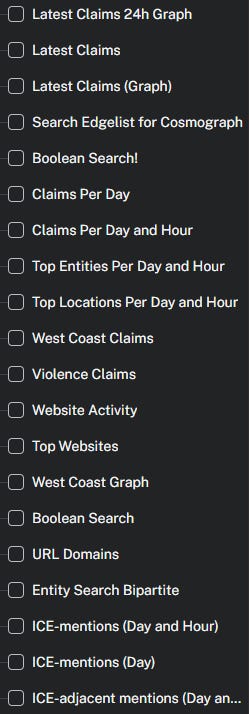
These are graph queries. I can run them anytime. I can investigate anything that I want. My GraphRAG isn’t just for answering. My Agents don’t just answer. The data itself is useful to humans and AI agents. I can create any query I want, and I can save it for future use. I create intelligence that investigates, not just answers. Investigation leads to better answering. Real-world investigation unlocks a lot of things, too. So, you should buy access to my platforms and enjoy learning OSINT. It is a useful skill.
Explainable Results
It is dead easy to understand Graph outputs. Look.
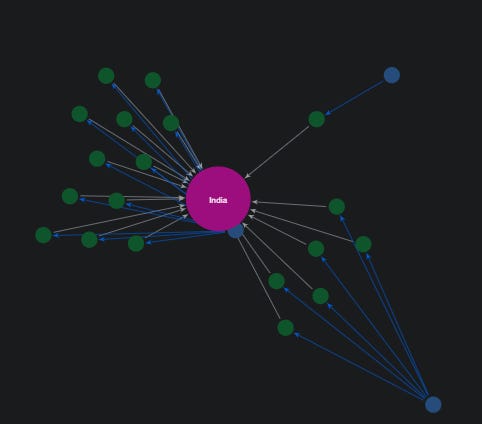
It is crystal clear that nodes point at other nodes. You can literally click them with a mouse and investigate them. You can have total transparency with AI if you build for it.
I want transparency and explainability with AI. Don’t know what explainability means? Then read my friend Serg Masis’ amazing book. He attended my GraphRAG training. You could have met him and learned from him too if you had enrolled. Enroll in the next class. :) Capture opportunities, don’t miss them.
GraphRAG is Not the Only Way
This is just a fact: GraphRAG is not the only way. I could build GraphRAG without a Graph Database or Knowledge Graph, because I understand this topic deeply. However, I was asked in a podcast interview last week why someone should use a more complicated GraphRAG when they can just use a simple RAG.
That’s a nonsensical question. RAG is only simpler to people because everyone is talking about it. I have been writing about Graphs for years and they are very easy for me to use.
RAG is not simpler than GraphRAG. Fewer people have competency in graph, but most of you were not talking about tokens or text similarity in 2020. You could learn this if you wanted to. This is a competency problem, not an infrastructure problem. If people read and understood my writing, they wouldn’t have that competency problem.
Anyway, GraphRAG is not the only way, but it is a very good way, in my opinion. Why would I use RAG and Vector Stores when Knowledge Graphs unlock full investigation? I’m not here to make dumb AI Agents that struggle to answer simple questions. I am here to build real intelligence that traverses graphs, connects dots, and is able to tell me about things happening in the real world.
In order to build like me, one needs to be able to think more like me. I am a systems thinker. I teach my agents to be systems thinkers.
In cybersecurity, we have a saying:
“Attackers think in graph and defenders think in lists.”
I think many people’s agents are the same. They are answering based on similarity of document chunks, not connecting the dots of reality.
Unleash the Full Capabilities of AI
I want you to be able to build real intelligence. I want you to unleash the full capabilities of AI. This is not a, “Look at me! Me me me!” article. I have spent thousands of hours thinking and writing about graph in order to do big things with it. This isn’t a vanity project. I am here to help you.
If you want to unleash the full capabilities of AI, teach it to investigate, thoroughly. We’ve probably all gone to school. Not all students are the same. Build smart AI, not class clowns.
Thanks for Reading
This is on my mind today because I am building OSINT agents today. :)
In my well-informed opinion, you can’t build effective OSINT agents with just RAG, and tooling isn’t enough either. The underlying Graph Databases and Knowledge Graphs are also useful. I don’t just want answers. I want completeness in answering, I want transparency, and I want accurate answers. This is serious stuff and I hate when AI wastes my time.
I work hard because I want good things and a good future.
Thank you. I hope you enjoyed reading my thoughts.
Alright, a reminder:
My World AI interfaces have been available for months. Buy access and enable your agents to do investigations of the physical world. I am especially interested in selling to universities as this can supercharge their students’ learning.
My book has been out for years and is rated five stars out of five. Buy a copy today and give your Agents better ability to investigate.
You should attend my training and learn from me if you want to be an AI architect. These classes are priced much lower than they should be, but I can’t help but try to help people.
I am in business and I want to help your business reach its goals. You don’t need to understand everything that I know in order for us to work together. If you just want to benefit from what I know, reach out with me. I’ll build your company’s dreams. I’ll help you reach your goals. Let’s talk. Message me on LinkedIn.
Have a great day. I hope you enjoyed this article. I’ve enjoyed giving training sessions. We all learn from each other. I hope to see more of you in these training sessions.
Please tell your friends that they should read my blog. It is as simple as pushing this button. Please help me. I put a lot of effort into writing for you. Thank you. Have a great day! Let’s make the best AI agents we can together and solve real problems.
Awesome!