
Day 67 of #100daysofnetworks
Graphs Reveal Opportunity and Freedom

Today is going to be another spontaneous article, written in my natural voice. I like it best when writing happens this way, as it means that I have something that I feel is important to say, and that I hope others will learn.
I had a very interesting conversation today, and one insight from it was that people don’t always immediately know what they want to do when they begin their career.
We have an idea of what we want to study when we go to college, and then many of us do the work and then graduate. College is optional. The learning can happen anywhere. But the point is this: after learning HOW to do things with computers, people don’t always know what they want to use their new skills to do.
Not everyone is born with a core problem that they will obsess over and spend a lifetime working on. I don’t even know what mine is, really, other than that I love helping people and that I want people to enjoy living, not just live. I want people to be safe, happy, and live meaningful and enjoyable lives.
Where Do We Begin?
Today is 2026. I can imagine that most graduates from Computer Science and Information Systems will have a desire to do something with Artificial Intelligence, because that is all that anyone seems to ever talk about these days. If you want to make a living, doing the cool thing very well is one way.
But if it were 2018, graduates would likely be more interested in doing something with Machine Learning, and likely be most interested in Neural Networks, Computer Vision, and XGBoost, as that was the hype for several years pre-LLM.
So, in a lot of graduates’ minds at the time, I can imagine that their job interests looked something like this:
Just one node: Machine Learning. “I want to do Machine Learning when I graduate.”
But according to arXiv categories, Machine Learning actually exists as two categories, under two groups.
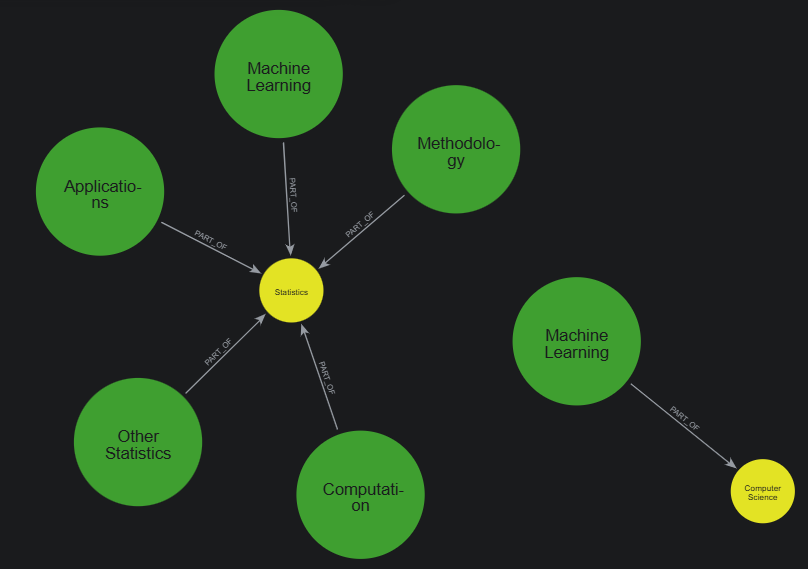
That means that according to even arXiv, there are two paths that you could go down, in terms of research, not just one.
And really, is the popular thing really the most interesting topic? What if you could see a hundred different topics, and choose the ten that actually interested you the most? Would you really be interested in “Machine Learning”, or would you be interested in “Artificial Life”, or studying life outside of our planet? There are many different cool topics to explore.
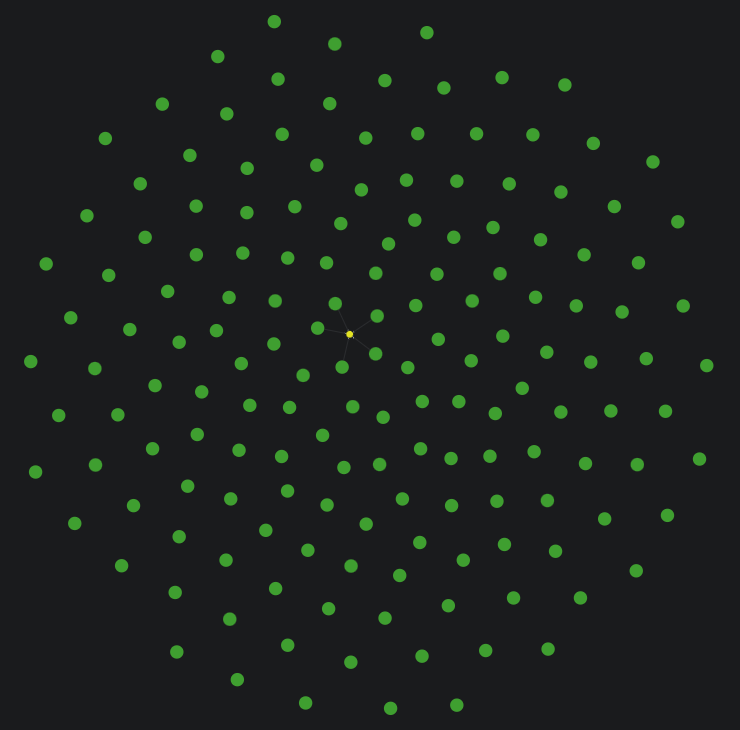
If I look into the Artificial Life database, Artificial Intelligence is a subset, and there are many other categories that may be interesting. Machine Learning is a few nodes out of many. Is Machine Learning really the most interesting thing in the world?
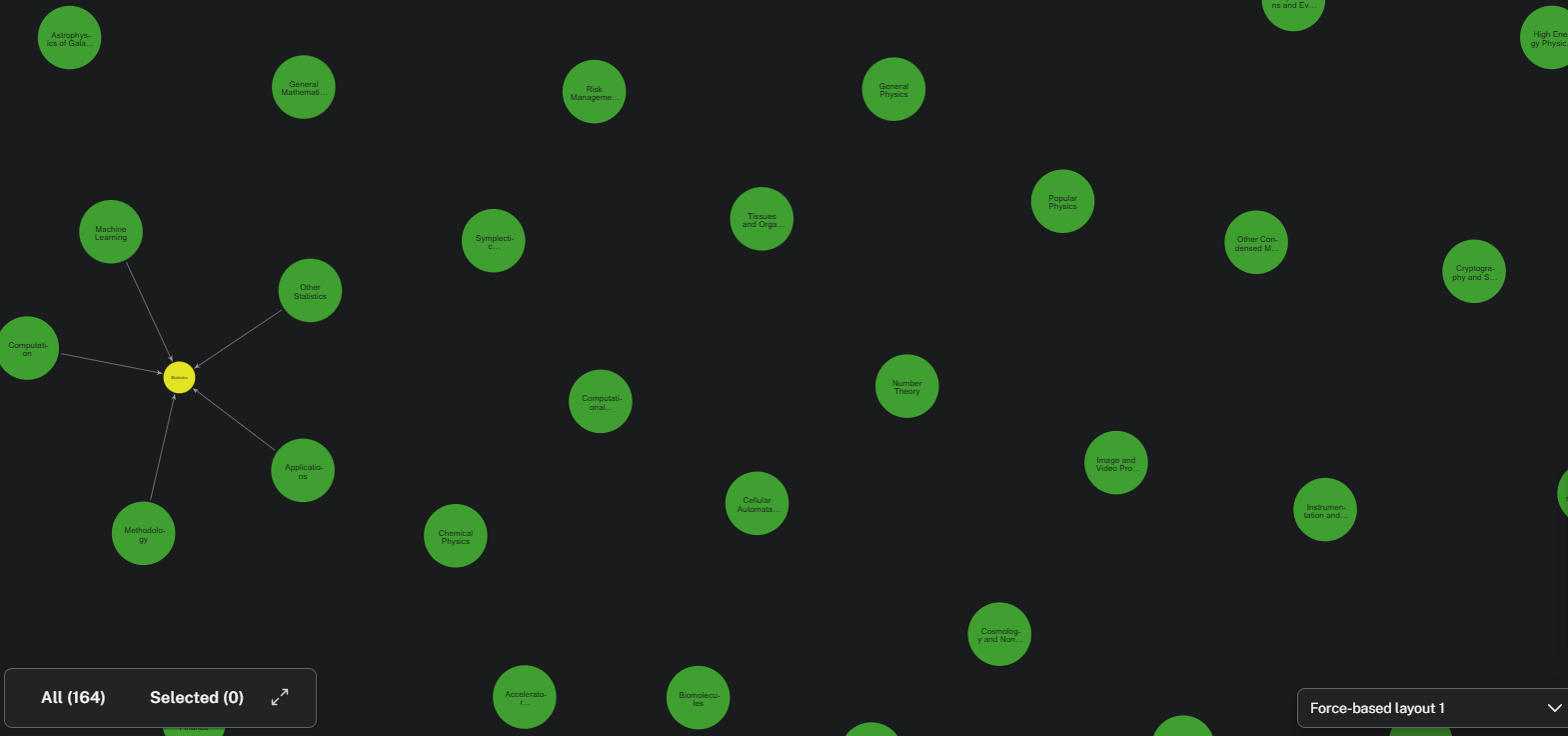
I think that Machine Learning is cool, but if I were to pick something to spend four years studying, I doubt it’d be Machine Learning. Other interesting categories that I can see include:
Astrophysics of Galaxies
Signal Processing
Computational Complexity
Quantum Gases
High Energy Astrophysical Phenomena
And many, many more.
Graphs Expose Opportunities
This blog series has shown it time and time again: Graphs expose opportunities. You can identify threats to mitigate, and benefit from their lack of effectiveness (think cybersecurity and malware). You can identify opportunities to capture before anyone else, and benefit in several ways (profitability, viability, etc.).
Or, as a student, you can find things that actually interest you, and you can plot the course of your own life, rather than following crowds or choosing out of lack of known choices.
If you think that your only choice is Machine Learning, then you will choose Machine Learning. If you think that your only choice is Artificial Intelligence (many people these days), then you will naturally choose Artificial Intelligence. We all have bills to pay. Popular fields pay well, if you can manage to get hired.
But if you can see the countless opportunities around you, you can be more selective, and you can take your time. You can also more easily pivot, after discovering that you really aren’t into the thing you have chosen. It happens to everyone. I was good at Data Operations, but I wouldn’t say that I enjoyed it. I pivoted to Data Engineering, then Artificial Intelligence Platform Engineering in 2020, and the rest is history. Pivots are important.
But look, there is a lot out there.
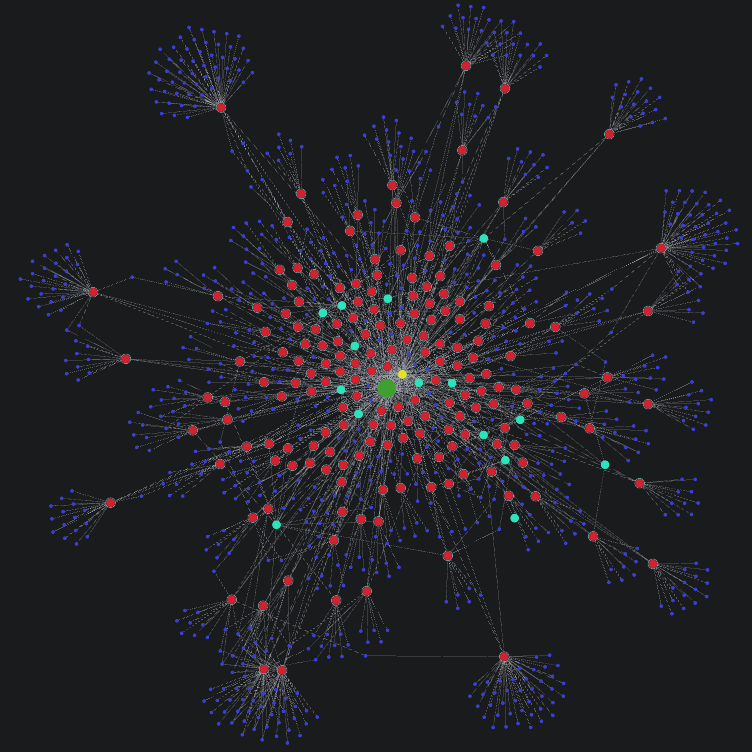
I don’t write this blog because the pictures are cool or because it is important to know how to use the Page Rank algorithm, or because the Louvain Method is considered important. These things are important because they expose useful context that you can use to solve problems and live a fulfilling life.
I don’t explain or show anything because it is cool. I show and explain things, because this knowledge led me to freedom, and I want you to have that too.
I want you to be able to be what you really want to be. We are all unique.
Thank You, Readers
Thank you, readers. I have met so many wonderful people through the interactions my book and blog have led to. We are almost at 1000 subscribers, and I have no idea how many other random readers are out there. Network Science is not as popular of a topic as Machine Learning, so I expected this to stay small and never hit a thousand, but here we are!
Just thank you. Life is very busy, but I am happy with how things are going. My new company Verdant Intelligence is doing really well, better than I could have imagined it’d be doing this quickly. Some people are using the Living Library of Knowledge (LLK) that I have written about previously. Things are working out.
This is just a quick article. I wanted to get this off of my mind. I hope that you will use systems thinking (and maybe even my data) to plot out the future you really want. Maybe you are already there, or maybe you aren’t. I don’t think that any of us ever really arrive; it’s just one day to the next, constant pivots, constant learning.
Thank you all for reading my thoughts and writing. You have my heart.
Please Support this Work!
I have written over 60 articles for this series. Each one takes about four hours of research, and several pages of writing and editing. Here are some ways you can support the blog!
If you can do only one thing, please mention this blog to your friends and colleagues. Please help it grow!
Please subscribe if you have not. This motivates me like nothing else!
BIGGEST HELP to the BLOG: Please consider upgrading if you are a subscriber. Thank you to all current paying subscribers for making this research and development possible! You can have Database access and minimal GraphRAG code if you want it.
Please buy my book to understand how I think about Natural Language Processing and Network Science combined.
I will open up early access to my second book Graph: Zero to Hero very soon. Please stay tuned.
Platform access to the Living Library of Knowledge is opening, NOW. Please let me know if you are interested in access.
Please reach out to me if interested in training related to Data Science, Data Engineering, Network Science, Knowledge Graphs, Artificial Intelligence, or anything else I write about. Feel free to message me on Substack or on LinkedIn!
Feel free to hang out in the comments and have a good time!
We have come so far since the very first day of the very first #100daysofnetworks. I love writing for this series. Thank you for being a part of it!